
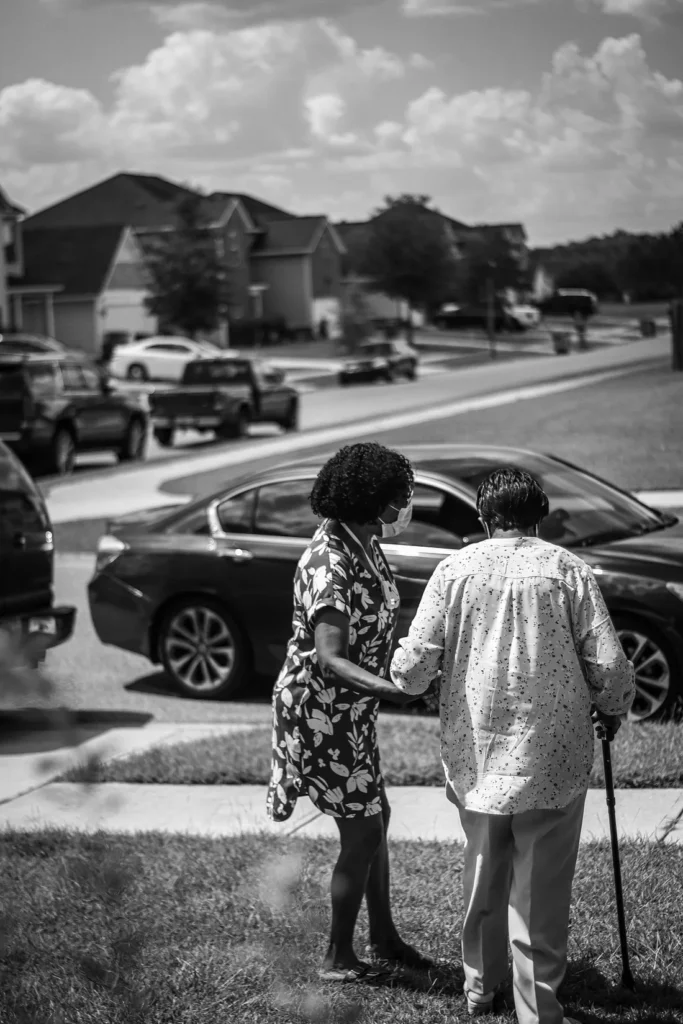
Loved ones carry a lifetime of memories, yet they are often left out of everyday conversations. Consistent engagement with loved ones helps combat loneliness and depression. Research shows that interacting with our loved ones can improve their mental health and reduce cognitive decline. We assume their hearing is gone. We talk over and around them instead of talking to and with them. Whether it’s fear of memories that may cause sadness, not knowing what to say, or fear of saying the wrong thing, know that most loved ones welcome meaningful interactions. Yes, their hearing may be diminished, or some may not speak or respond because of a medical issue; despite this, let that not be the reason you don’t include them.
Memories Matter to Loved Ones
When engaging in conversations with your loved ones, it’s valuable to use discussions that echo with their lived experiences. It could be about their favorite memories, education, employment, favorite childhood games, first boyfriend or girlfriend, vacations, life’s blunders, military service, hobbies, and life in general. Any childhood pets? What about their favorite movie? Any family traditions? How did you meet your boo? These are good starting points. You would be amazed at the stories our elders have to share. Memories help them take their minds off the reality of aging(if only for a short time). Make the conversation lively and fun.
History Matters to our Loved Ones
History is another great memory for our elders to share. The past holds many lessons we can learn from. How did they handle years of depression? How did they handle segregation? How did they make ends meet? How did they stretch a dollar? What did Sunday dinner look like? These lessons we can live by today, deepening the bond between our loved ones and the caregivers who care for them. Conversation is more than an activity; it can be a lifeline. Aging brings death and dying to our door. It’s okay to ask… how they want to be remembered? This gets to the heart of what they have found important in life. My momma’s was…raising us(her children) to be productive citizens.
As Your Proactive Caregiver Advocate, spending time with loved ones can be special — if we take the time to engage and connect. A straightforward question can bring out a great story, a big smile, or even a moment of laughter. Be Safe! Be Well!
Dr. Cynthia J. Hickman is a retired registered nurse and case manager who serves as the CEO of Your Proactive Caregiver Advocate. She is excited to share her latest book, The Essential Caregiver Training Course for Corporations and Community. Her previous work, From the Lens of a Daughter, Nurse, and Caregiver: A Journey of Duty and Honor, and The Black Book of Important Information for Caregivers, reflects her experiences and insights from her heartfelt caregiving journey.
Website: www.cynthiajhickman.com