
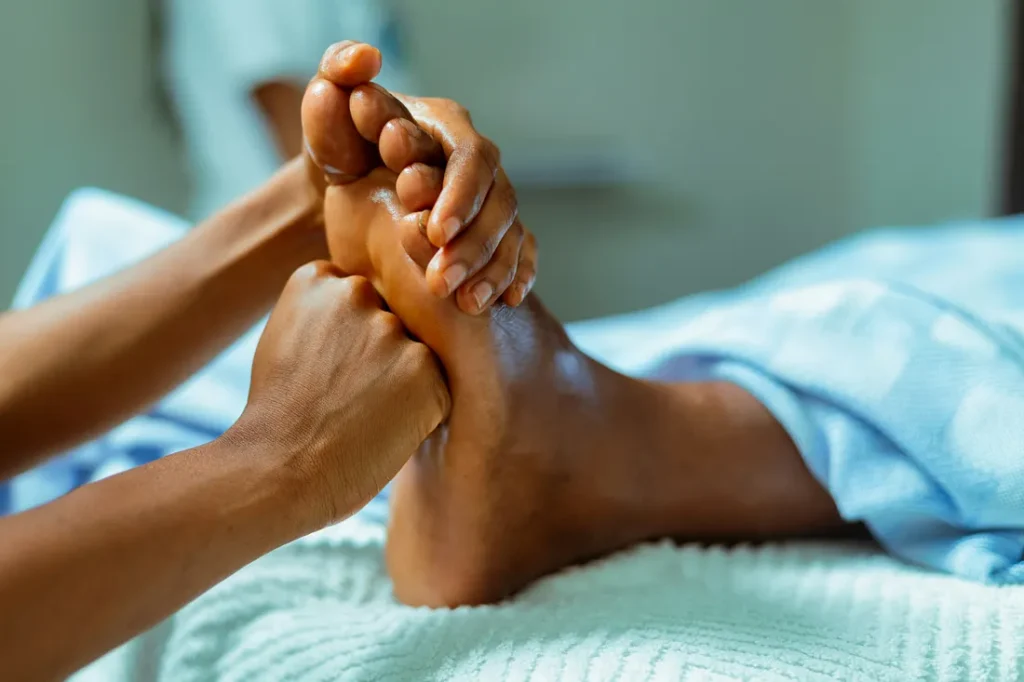
Understanding the importance of foot care for your elderly loved ones is often a misstep in caregiving. Ever wonder why aging feet are overlooked? I’m sure there are many personal reasons. Since our feet have, over the years, maintained balance and embraced our loved ones’ independence, when they can no longer care for their feet, caregivers must assume the task.
Importance of Caring for Aging Feet
Often, we focus so much on chronic medical conditions and the necessities of feeding and clothing that we put on socks and shoes without inspecting our feet. As we age, our feet carry the weight of our bodies and a lifetime of experiences. Maintaining healthy feet reduces the risk of falls, infections, and more serious complications (such as amputations).
Frequent Foot Problems in Aging Feet
Care for aging feet can reveal challenges. As a caregiver, recognizing signs of concern early can prevent major troubles. Sharing a few problems you may find that require you to speak with your medical team and, if needed, make an appointment with a podiatrist (foot doctor specializing in foot care). Some problems caregivers may encounter when caring for aging loved ones’ feet are poor circulation. Peripheral artery disease (PAD) is a common condition in our elderly loved ones. It can display discolored skin and delayed wound healing. You may also notice cold feet.
Toenail issues (fungal infections). Toenails may be discolored, brittle, and thick. Dry skin and corns are often caused by poor footwear or by feet rubbing against hard surfaces in shoes or boots. Keeping feet moist with lotions that don’t contain drying agents (like alcohol) can help.
Joint inflammation caused by arthritis can be painful, and you may often see deformities in your loved one’s feet. If a loved one has been diagnosed with osteoarthritis or rheumatoid arthritis, ensure the medical team is monitoring and treating accordingly.
If caring for a loved one with diabetes, neuropathy(pain signals are reduced) is a common problem. Sometimes feelings get lost in the feet, and often blisters and cuts happen without awareness. Infections are common. Please pay attention.
Foot Deformities in Aging Feet
Bunions and hammertoes can cause chronic pain and difficulty wearing shoes. The healthcare team can offer a plan of care to address and improve comfort. We all know when our feet hurt, our body hurts!
Daily Foot Care Routine -Your Best Friend
Establishing a consistent routine is one of the best ways to keep feet healthy. Wash your loved ones’ feet daily. Don’t forget to dry thoroughly between the toes. Lotions are both good and necessary for keeping feet moist. I cannot stress enough the importance of inspecting feet daily and seeking medical attention for redness, swelling, discomfort, blisters, and cuts. Trimming nails is part of foot care, but if there are medical concerns, a podiatrist can help. If circulation is poor, keep feet warm with soft socks.
As Your Proactive Caregiver Advocate, each condition requires caregiver attention. The key is to address the foot care needs early and include the healthcare team. If a specialist is needed (a podiatrist), the specialist will monitor your loved one to prevent complications and improve comfort. Be Safe! Be Well!
Dr. Cynthia J. Hickman is a retired registered nurse and case manager who serves as the CEO of Your Proactive Caregiver Advocate. She is excited to share her latest book, The Essential Caregiver Training Course for Corporations and Community. Her previous work, From the Lens of a Daughter, Nurse, and Caregiver: A Journey of Duty and Honor, and The Black Book of Important Information for Caregivers, reflects her experiences and insights from her heartfelt caregiving journey.